How to Read Height Measurement on Scale Rods: 402KL Markings
Learn how to read height measurement on scale rods using the 402KL's inch and centimeter markings, including its ⅛-inch and 1 mm graduations.
On this page
Height: inches and centimeters
Weight: pounds and kilograms
On this Health o meter scale rod, you’ll find both markings for inches and centimeters. On other health-care measuring rods, check the unit labels before reading the markings.
Height graduations in inches and centimeters
The 402KL specifications list the unit type as inches or centimeters and also document how those height graduations work. For example, a standard scale rod will mark off each inch at 1-inch intervals, but then add smaller tick marks in between that measure fractions of an inch. The 402KL specification gives the height graduations as ⅛ inch on the inch scale and 1 mm on the metric scale.
This means we have to look at the height-rod range and its documentation of how the heights should be measured. A stadiometer is typically designed so that the bottom end of the headpiece is used to take a measurement, and the markings along the rod represent the height of the person being measured. In some cases, however, you might use a different edge or junction when measuring.
Height-rod range: 11 ⅞–84 inches / 30–213 cm
Height graduations: ⅛ inch / 1 mm
Eight ⅛-inch intervals = 1 inch
Ten 1 mm intervals = 1 centimeter
Why you can’t identify the physical reading point from the documented specs
While it’s possible to interpret what a particular marking means by looking at the height-rod range and its graduation, you still need to determine exactly where the number represents on the rod. This is because there are two possibilities: either you read the height at a certain point, or you read the height by counting intervals from a previous numbered mark.
To do this, you’ll have to look at the installed rod’s instructions. The supplied 402KL specifications do not identify the correct reading edge or junction; use the installed rod’s instructions to establish it before taking a reading. Once you’ve determined where to take your reading, you can begin counting the intervals toward the next numbered mark within the same unit scale.
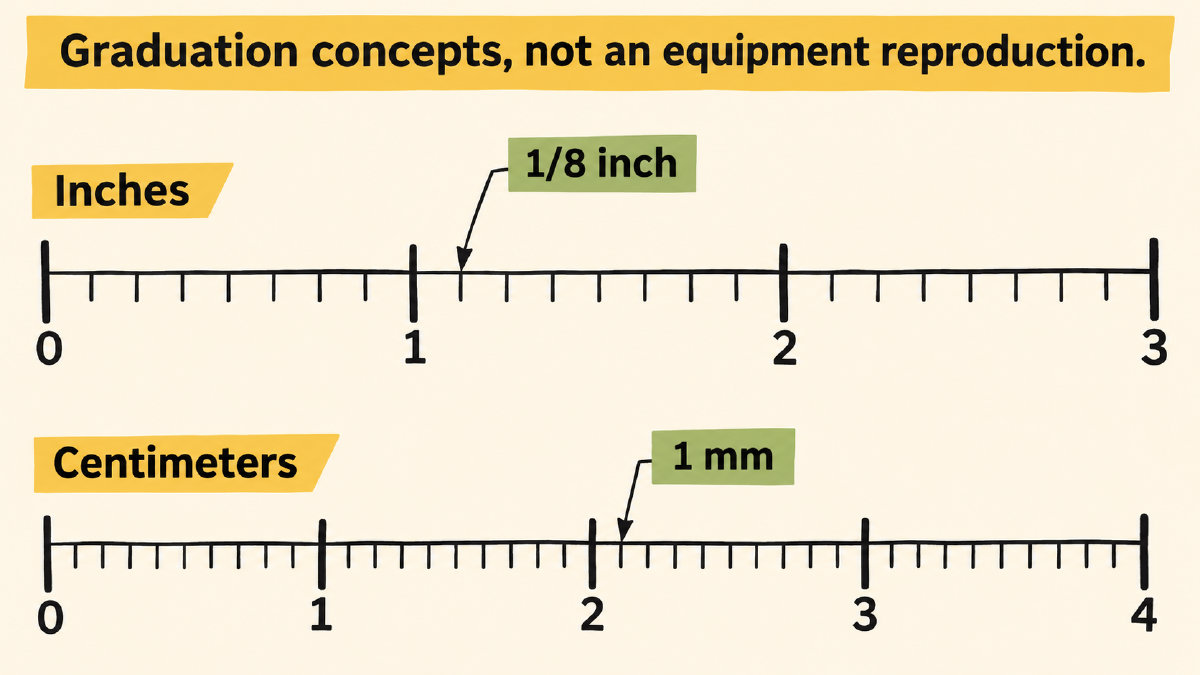
Counting intervals from the preceding numbered height mark
Once you’ve established the correct reading point from the installed rod’s instructions, count intervals from the preceding numbered height mark within the same unit scale to that point. If you don’t see any numbers printed, you may have to calculate them manually based on how many intervals separate the numbered marks. For example, if you measure 4 ⅛-inch intervals beyond a marked number, then that equals an additional ½ inch. Similarly, five 1-mm intervals would equal 0.5 cm.
Sources
Try the height tools
Compare two to ten people or convert a height precisely.
Compare heights →Height converter →Related articles
What Level of Measurement Is Height? Why It Uses a Ratio Scale
What level of measurement is height? Learn why numerical height uses a ratio scale, what true zero means, and when height categories are ordinal.
Read articleHow to Read Height Measurement in Mexico
Understand height measurement in Mexico through official metric units, decimal-meter examples, and the documented phrase “un metro 14.”
Read articleA Feet and Inches Calculator Excel Users Can Build on Windows
Build a feet and inches calculator in Excel for Windows with numeric inputs, total inches, height differences, and normalized feet-and-inches results.
Read article